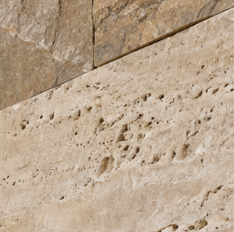
Sandstone Veneer Panels — Flexible Stone Collection

Angtai's sandstone veneer panels are a flexible stone (soft porcelain) product manufactured to reproduce the color and grain of sandstone — not a quarried mineral cut from a hillside. That distinction matters for spec compliance, weight budgets, and lead time, and it's the reason architects and distributors come to us instead of a stone yard. Because the finish is applied through firing-free inkjet technology rather than sawn from a slab, we hold consistent color across large runs, bend panels around curved substrates, and quote OEM/ODM variations without waiting on a quarry.

Specification
Type
  • Luminous Series
  • Textured Series
  • Smooth Series
  • Foamed Ceramic Series
Color
  • Black
  • Pink
  • Brown
  • Multi-color
  • Grey
  • Beige
  • Red
  • White
  • Orange
  • Yellow
  • Green
  • Blue
  • Violet
Size
  • 1200×2400
  • 1200*3000
  • 1200*2900
  • 600*1200
  • 600*2400
  • 600*3000
Order by

What Is a Sandstone Veneer Panel (Flexible Stone Version)

A conventional sandstone veneer is a thin-cut slice of real sandstone, subject to natural pitting, weight, and quarry-dependent supply. Angtai's version starts from a soft porcelain (MCM) substrate and receives a water-based, inorganic, non-fired ink layer engineered to match sandstone's warm tones and grain movement. It behaves like a manufactured cladding material — consistent thickness, bendable, produced to order — while reading as natural stone once installed. Material composition, adhesion mechanism, and how this differs from quarried sandstone are detailed in the sandstone veneer panels guide.

Panel Sizes & Specifications

Available sizes: 1200×2400 mm, 1200×3000 mm, 600×1200 mm, 600×2400 mm, 600×3000 mm.

PropertyValue
Thickness & weight (kg/m²) Confirmed per finish and substrate during the custom-solution quote step
Minimum bend radius Set per project based on panel thickness and curve profile — confirmed during quoting
Temperature tolerance -40°C to 150°C
Wear resistance Grade 4 (manufacturer factory rating)
Outdoor fade resistance 20+ years without fading
Surface behavior Self-cleaning, rain-washable
Minimum order quantity Varies by size and finish — confirmed during the custom-solution step
Compatible substrates Concrete, cement board, Etter board, existing tile, OSB, aluminum-composite panel, calcium-silicon board, plate metal

Fire resistance, the Grade 4 abrasion rating, freeze-thaw resistance, and the antibacterial surface are results from Angtai's internal factory testing. We have not published third-party certification numbers (e.g., ASTM E84, EN 13501, specific freeze-thaw cycle counts) for this finish — request current test documentation before a code-sensitive submittal.

Key Advantages

Flexible and bendable

Panels conform to curved surfaces without cracking, used on columns, reception desks, and rounded facade sections.

Fire resistant

Resists ignition under normal exposure conditions.

Colorfast

The sandstone tone holds through long-term sun and weather exposure rather than chalking or fading.

Freeze-thaw resistant

Withstands repeated freeze-thaw cycles without cracking, relevant for exterior installs in cold climates.

Antibacterial surface

Relevant for hospitality, healthcare, and food-service interiors.

Lightweight

Significantly less mass per panel than quarried sandstone, cutting structural loading and shipping cost.

Honest Limits to Plan Around

Not structural.

The panels are a cladding veneer applied by adhesive; they carry no load and depend entirely on the wall or facade substrate behind them for structural performance.

Seams show at panel breaks.

At 1200 mm and 600 mm width joints, seam lines are visible up close; large uninterrupted walls read as a grid unless a staggered or running-bond layout is used.

Substrate flatness matters.

Because the panels are thin, a wavy or uneven wall telegraphs through the finish — noticeably out-of-plane substrates need a leveling coat before installation, not just cleaning.

Where Sandstone Veneer Panels Are Used

Interior feature walls, hospitality lobbies, and retail environments use these sandstone-look wall panels for warmth without the weight penalty of real stone — see interior stone wall panels. On the exterior, the same finish goes onto facades and ventilated rainscreen assemblies where the 20+ year fade resistance and freeze-thaw performance matter most: rainscreen cladding systems and exterior stone wall panels both use this substrate. Because the panels bend, curved columns and reception desks are a common application; the minimum bend radius for a given curve is confirmed through curved wall cladding at the quote stage.

Substrates & Installation Overview

Sandstone veneer panels install by direct adhesive application over a prepared substrate — no mortar bed, no lath. Compatible bases:

  • Concrete slab or cement wall
  • Etter board
  • Existing tile (firmly adhered)
  • Oriented strand board (OSB)
  • Aluminum-composite panel
  • Calcium-silicon board
  • Plate metal
flat gray panel surface ready for tiles
smooth white wall panels, ideal for soft tile installation
aluminum panels with rivets for flexible stone installation

The substrate needs to be level, clean, dry, and free of dust, oil, and loose particles before adhesive goes down; a wall solid layer (interface agent) goes on first over smooth walls to improve adhesion. Step-by-step application — applying adhesive, positioning, temporary fixing, trimming edges, and cleanup — is laid out in the Angtai flexible stone installation guide.

Pricing & Order Brackets

Per-m² pricing is quote-based rather than fixed, and it moves with three brackets: sample quantities (a handful of panels for evaluation), pallet-scale orders (typical single-project cladding runs), and container-load orders (distributor and bulk-buy volume, where the rate per m² drops noticeably). Quotes come back within 24 hours of inquiry; the flexible stone price guide breaks down what else moves the number — thickness, finish complexity, and order size.

How to Order

Angtai displayed this sandstone-toned flexible stone finish at Angtai to Showcase Flexible Stone Collection at Marmomac 2025 in Verona.

1. Inquiry

submit project details; quotes return within 24 hours.

2. Custom solution

confirm size, thickness, bend radius, and finish for your sandstone tone.

3. Sample

free after price confirmation, shipped within 5 days (courier cost on you).

4. Order confirmation and production

typically 25–30 days depending on quantity.

5. Shipment

via T/T or L/C payment terms.

6. After-sales

24-hour customer service for install or product questions.

Sandstone vs Other Flexible Stone Finishes

Sandstone is one tone within Angtai's broader flexible stone range. A cooler, more linear vein pattern is available in flexible travertine panels or slate-look flexible stone — both sit in the same product family and install the same way. Format comparisons across flexible stone, laminate veneer, and other thin-cladding options are in thin stone veneer vs the alternatives; a slimmer panel profile is available under thin & lightweight stone veneer panels.

FAQs

Is stone veneer expensive?
Cost depends on panel size, finish, and order bracket rather than a fixed rate. The flexible stone price guide lists the factors that move a quote up or down.
What do you put under stone veneer?
Angtai's sandstone panels adhere directly to concrete, cement board, Etter board, existing tile, OSB, aluminum-composite panel, calcium-silicon board, or plate metal, provided the surface is level, clean, and dry.
Category

Explore Featured Categories

Select Your Language