By Jimmy
 21 Aug, 2026
 5 Minutes Read
For an early U.S. budget, This Old House's June 2026 stone-veneer guide reports about $13–$22 per square foot professionally installed, including roughly $11–$18 for material and $2–$4 for labor. That is a broad residential benchmark, not an Angtai quote: veneer type, panel format, wall preparation, access, freight, tax and local labor can move the final number substantially. For flexible-stone pricing tied to a real wall area, request a project quote.
The following figures were checked on August 26, 2026. They are source-specific budgeting references and can change; they exclude Angtai freight, tax, duties and project-specific preparation unless the source states otherwise.
| Reference | Published price | Scope |
|---|---|---|
| This Old House 2026 stone veneer guide | $11–$18/sf material; $13–$22/sf installed | Broad U.S. residential stone-veneer benchmark |
| Ply Gem stone veneer cost guide | $6–$9/sf manufactured veneer material; $15–$30/sf natural stone siding | Material comparison; installation varies |
| Casa di Sassi manufactured-vs-natural comparison | $8–$12.50/sf manufactured stone material | Manufacturer-published reference, not an Angtai price |
Use the same scope when comparing quotes: panel or stone only, adhesive/mortar, substrate preparation, trims, waste, labor, freight, tax and duties. Contact Angtai for current flexible-stone pricing by model, size and quantity.
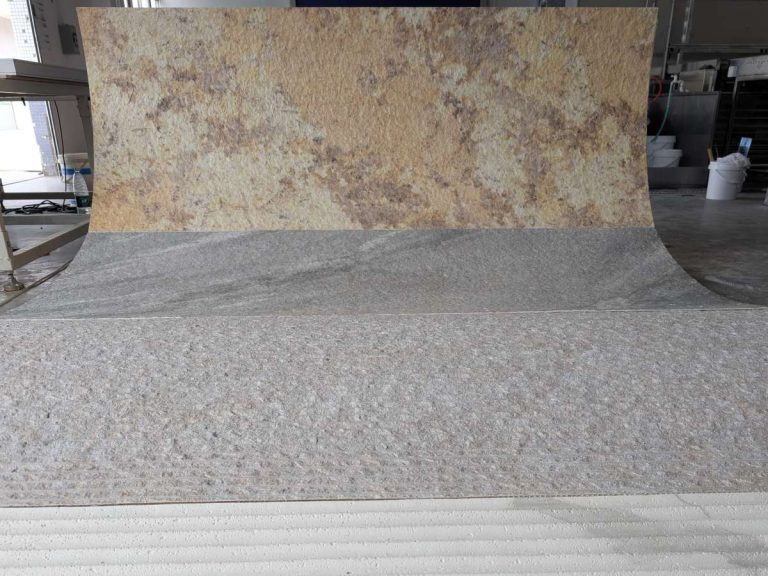
Traditional thin veneer is sold as individual stones or small flats, each one set, leveled, and grouted by hand — hours of labor per square foot. Large-format rigid panels flip that math: a single 1200×2400mm sheet covers about 31 sq ft in one piece, and the largest format, 1200×3000mm, covers close to 39 sq ft — replacing what would otherwise be dozens of small pieces and their joints. Fewer joints means fewer labor hours on the wall.
Natural quarried stone and manufactured/composite veneer carry different cost structures — quarrying, transport, and finishing versus molded, colored production. Manufactured and panelized products consistently undercut natural stone on material cost, though the finish and long-term wear profile differ, as covered in Sandstone Veneer Panels Pros, Cons & Durability.
Cost climbs fast on unprepared walls. Panels install directly onto substrates like concrete slab, cement board, tile, OSB, aluminum-plastic panel, calcium-silicon board, or plate metal — but every surface has to be level, clean, dry, and firm, free of dust, oil, and loose particles. Smooth walls need a wall solid layer (interface agent) applied first to improve adhesion before adhesive goes on, which adds a prep step and cost on rougher or older surfaces, whether the wall is inside or outside, as detailed in interior stone panel trade-offs. On projects that require a fire-rated assembly, the backing substrate's classification matters as much as the veneer itself — worth checking combustible meaning before specifying metal, wood-based, or composite substrates behind the panels.
A single accent wall costs less per square foot to install than a full facade, but the relationship isn't linear — corners, window returns, and curved sections add cutting and fitting time regardless of total area. Exterior installations typically carry more of this complexity than interior ones, which is why exterior stone panels cost more per square foot on average than a comparable interior accent wall.
Traditional veneer is installed piece by piece over a prepared wall, while large-format panels can cover more area per placement. That difference can reduce joint work, but it does not create a universal labor saving: substrate correction, access, panel handling, corners, openings, temporary fixing and local wage rates still control the installed cost. Ask installers to price the same wall area and preparation scope before comparing systems.

Thin veneer can cost less to transport and install than full-depth stone because it is a facing rather than a load-bearing masonry unit. The actual saving depends on the veneer material, required backing, attachment system, access and local labor; compare current bids instead of applying one fixed percentage. See thin stone veneer vs alternatives for the system-level trade-offs.
Panel pricing depends on real project variables, so have these ready before you ask: total square footage, substrate type (concrete, tile, OSB, metal, etc.), interior or exterior application, and installation timeline. Angtai's process is built for fast turnaround: submit an inquiry, get a customized solution, and receive a quote response typically within one business day after complete project details are received. Sample dispatch is typically targeted within five business days after price confirmation, subject to availability (you cover express shipping), so you can check color and texture in hand before committing to a full order.
Send project details to start pricing, or review flexible MCM stone-look veneer panels for available sizes and finishes.
Is stone veneer cheaper than stone?
Often, but the comparison depends on veneer type, substrate preparation, access and local labor. Current U.S. guides place professionally installed stone veneer around $13–$22 per square foot; obtain local bids and a product quote before budgeting.
How long do stone veneers last?
Service life depends on the selected product, exposure, substrate, adhesive, detailing and maintenance. Angtai reports long-term color-retention and freeze-thaw testing for selected flexible-stone models; request the applicable reports and scope before comparing lifespan claims.
How much should I charge to install stone veneer?
Set labor pricing from local wage rates, access, wall preparation, panel format, corners, openings and the specified installation system. Published national ranges are budgeting references, not a substitute for a site-specific contractor estimate.
Is thin stone veneer cheaper to install than traditional stone veneer?
It can be when large-format adhesive-set panels reduce piece count and joint work, but savings depend on substrate preparation, handling, access and local labor. Compare bids using the same wall area and system scope.
 Guidelines
 Guidelines
 Guidelines
 Guidelines
 Guidelines
 Guidelines