By Jimmy
 21 Aug, 2026
 7 Minutes Read
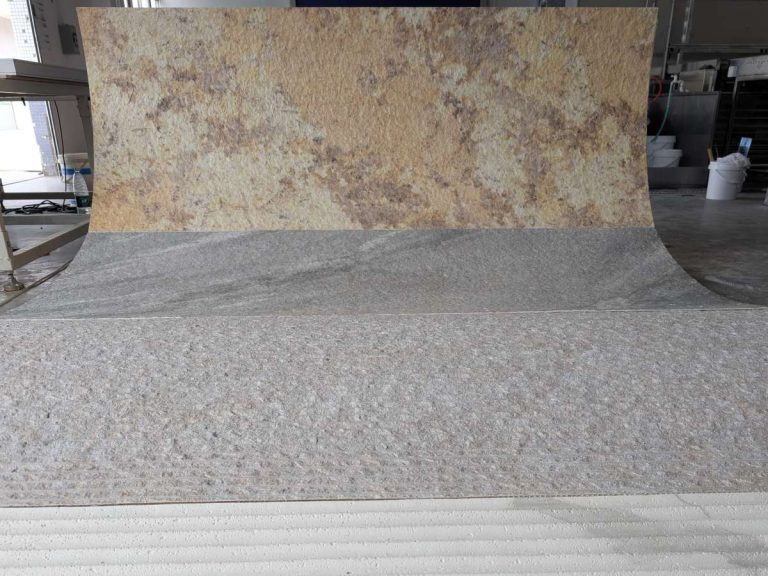
Flexible stone wall panels are thin sheets of real mineral surface fused to a lightweight, bendable backing, produced by Angtai in formats ranging from 600×1200mm up to 1200×3000mm across the flexible stone tile collection. Every advantage and limitation below is weighed against tested performance figures rather than marketing language, including the number most buyers actually want: how long the surface holds its color and finish once it’s on a wall.
Flexible stone is a soft-porcelain (modified clay material) surface bonded to a flexible substrate, not a printed PVC sheet mimicking stone texture. That composite structure — a mineral-based skin over a bendable backing — is what lets a panel conform to a curved wall within the specified bend radius, a mechanism explained in more depth by modified clay material and soft porcelain and MCM material.
Because the surface layer is thin rather than a solid quarried slab, panels carry substantially less dead load onto a wall structure, cut down two-person handling time on site, and open up substrates that couldn’t take the point-load of natural stone.
The flexible backing lets panels wrap columns, arches, and other non-flat geometry that rigid stone or tile can’t follow without extensive cutting. Curved wall cladding with bend radii and layout details built around this exact property.
Fire performance is product- and assembly-specific. Request the selected model’s report and classification, and do not substitute a general material description for a tested non-combustible or fire-rated assembly; see what non-combustible actually means.
Angtai reports a -40°C to 150°C test range and freeze-thaw performance for selected models. Request the applicable report, cycle conditions and installation-system scope before exterior specification.
Angtai reports antibacterial results for selected finishes and describes the surface as rain-washable. Request the applicable test report and model scope; cleaning frequency still depends on pollution, orientation, detailing and interior use.
Panels are adhered directly to a prepared substrate rather than mortared block by block, which shortens labor time considerably compared with cutting and setting natural stone, following the sequence in the installation guide.

A thin, flexible surface carries less mass than a solid quarried slab, so it absorbs a hard direct hit differently. No published impact-test rating exists for this product category, so treat it as a design consideration for loading docks, stairwells, and other high-contact zones — and choose a thicker or rigid alternative there if impact is a real risk.
Because the surface is a genuine mineral layer rather than a printed skin, flexible stone costs more per square meter to produce than printed PVC or foam faux-stone sheets — exact rates depend on series, format, and order volume, detailed at Flexible Stone Price Guide. If you’re pricing exterior cladding specifically, stone panels cost walks through what moves that number.
Approved substrates include concrete slab, cement wall, cement board, ceramic tile that’s already firmly adhered, OSB, calcium-silicon board, aluminum-plastic panel, and plate metal — but every one has to be level, clean, dry, and free of dust, oil, or loose particles before adhesive goes on. Smooth walls also need an interface agent coated on first. Skip this step and the panel’s rated durability won’t hold, no matter how good the surface material is.

Panel joints stay visible up close if spacing and cutting aren’t consistent, and that visibility matters more on large flat walls than on heavily textured finishes that naturally hide a seam. If a single panel is damaged years later, matching the exact color and texture of surrounding panels for a patch repair is harder than swapping a section of paint or a plain tile — factor spare panels into an order if an exact future match matters.
Cutting, bonding, and temporarily fixing panels while adhesive cures takes a different technique than laying tile or hanging drywall. First-time installers should expect a slower first wall and budget time to get comfortable with the adhesive working window before tackling a full facade.
Angtai backs orders with after-sales customer service and support, but warranty coverage terms should be confirmed directly for your specific order rather than assumed — this is worth clarifying before signing off on a large-volume purchase.

Angtai flexible stone panels are rated through internal testing to the figures above; request the applicable report and model scope, manufacturer-reported Grade 4 internal wear rating, and freeze-thaw stability across a manufacturer-reported -40°C to 150°C test range — but that’s a rating on the panel material itself. Real-world lifespan on any given wall still depends on the substrate prep, adhesive quality, and seam detailing covered above. A panel installed on a poorly prepped, damp substrate will underperform its rated durability regardless of how good the surface material is.
Flexible stone sits between printed faux-stone sheets — cheaper, but without a documented UV or wear rating — and traditional thin stone veneer, which is heavier and pricier but familiar to most installers. Thin stone veneer vs the alternatives breaks that comparison down by weight, format, and use case, and thin stone veneer cost puts real numbers against the veneer side of that trade-off.
Flexible stone panels make the most sense for interior accent walls, curved architectural features, retrofits where added structural load is a concern, and fire-conscious commercial interiors. They’re a weaker fit for budget-first projects or zones with routine hard impact where a thicker, rigid material may serve better. Sandstone-look alternatives carry their own trade-offs worth weighing side by side, covered in the veneer panels guide and sandstone veneer panels pros and cons, while interior stone wall panels pros and cons walks through the indoor-specific angle.

What is the price of flexible stone wall panels?
Pricing depends on the series, panel size, and order volume, so it varies project to project. Flexible Stone Price Guide breaks down the factors that actually move a quote.
What are the disadvantages of flexible stone wall panels?
The main trade-offs are lower impact resistance than a solid slab, a higher cost than printed faux-stone sheets, a strict substrate-prep requirement before installation, visible seams if joints aren’t cut consistently, difficulty exactly matching a patch repair years later, and a real learning curve for first-time installers.
Are faux stone panels good?
They’re a strong choice for lightweight retrofits, curved features, and fire-conscious interiors where reduced structural load and design flexibility matter. They’re a weaker fit for tight budgets or high-impact zones where a solid, rigid material may hold up better over time.
Are flexible stone panels durable enough for exterior use?
Potentially, subject to the selected model and complete installation system. Angtai reports accelerated-weathering color-retention and freeze-thaw results for selected products; request the applicable reports and scope. Facade-specific formats and weatherproofing detail are covered under exterior stone wall panels.
Weigh these trade-offs against a full breakdown of formats and installation requirements in exterior stone panel guide, or browse the flexible stone tile collection directly. Ready to get pricing for your project? Contact Angtai for a factory-direct quote.
 Guidelines
 Guidelines
 Guidelines
 Guidelines
 Guidelines
 Guidelines