Soft Porcelain (Modified Clay Material): Series, Sizes & Specs

Soft porcelain is a flexible, non-fired inorganic cladding material used as a lighter, bendable alternative to rigid stone and ceramic tile. Also sold as Modified Clay Material (MCM) or as **soft porcelain tiles**, it's made from natural minerals, resins, and reinforcing fibers, decorated with a water-based inorganic ink rather than a fired glaze.

How Soft Porcelain Is Made — Factory-Direct, In-House Ink R&D

Soft porcelain starts as a blend of natural minerals, resins, and reinforcing fibers — no clay firing involved. The mix is molded into sheet form, then cured under controlled temperatures rather than fired in a kiln. Surface pattern comes last: a proprietary water-based inorganic ink is inkjet-printed onto the cured sheet, the same ink and printing technology used across the wider product range on substrates from natural stone to glass and metal.

That ink technology isn't outsourced. Angtai runs 14 dedicated ink process production lines alongside 3 soft porcelain production lines inside a 36,000 m² factory, staffed by 100+ employees including 30+ R&D and technical specialists. The company holds national high-tech enterprise certification and won the China Building Materials Science and Technology Progress Award for its infiltration ink work — credentials that sit with the ink chemistry itself, not just the finished panel. Buying direct from a manufacturer that develops its own ink, rather than a trading company reselling someone else's sheet stock, is what determines batch-to-batch color consistency on a large facade order.

Browse the current MCM Flexible Stone Tiles range or contact Angtai directly for factory pricing on a specific series.

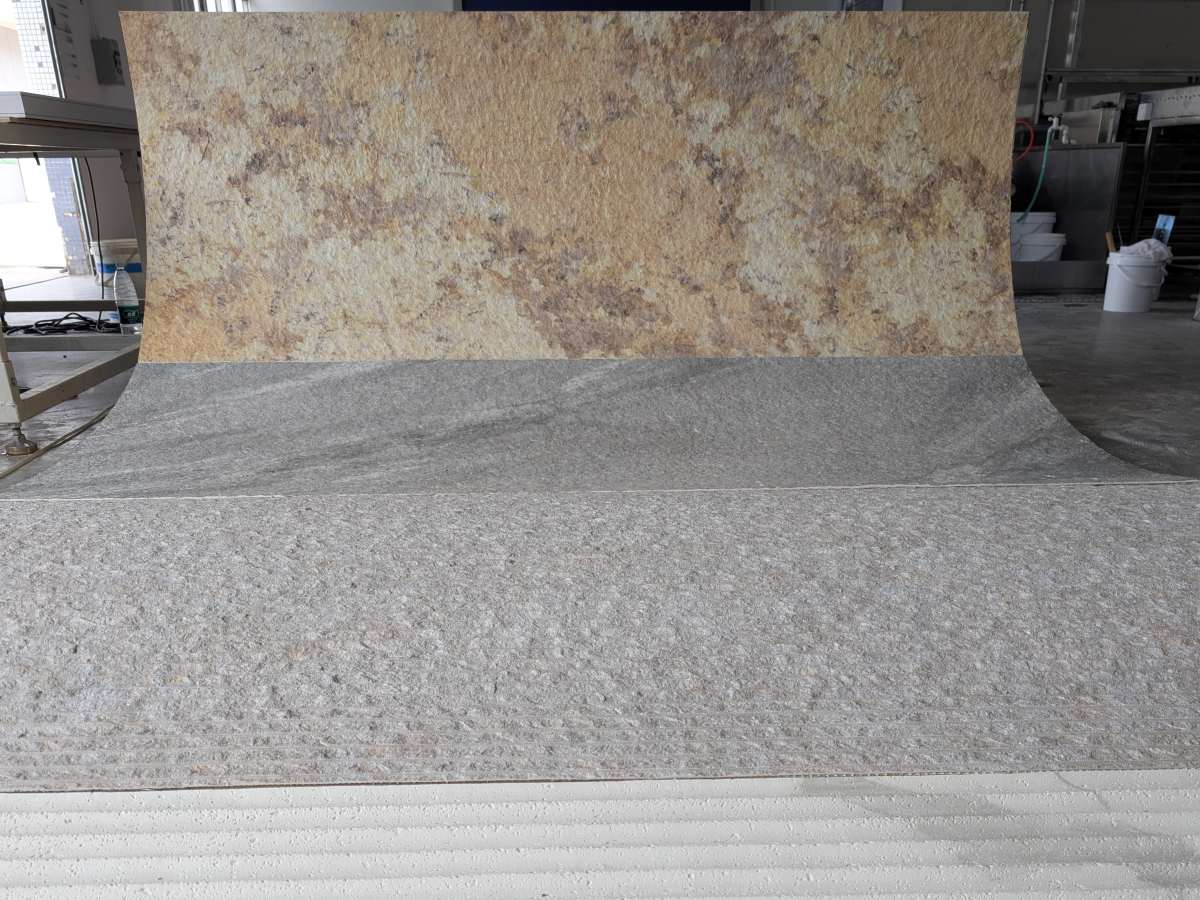
Flexible stone sheet standing upright in workshop, displaying natural texture and pliability.

Soft Porcelain vs. Soft-Paste Porcelain

The name overlaps with a completely different material. Soft-paste porcelain is an 18th-century antique ceramic body — a mix of clay, ground glass, and bone ash fired in a kiln at lower temperatures than true hard-paste porcelain, prized by collectors and museums. Soft porcelain (MCM) is a modern, non-fired cladding material developed for walls and facades. Beyond sharing a name, the two have no connection in composition, manufacturing, or use — one is antique tableware, the other is a construction product.

Soft Porcelain Series, Sizes & Specs

Soft porcelain sits within the broader MCM material family — see how MCM is classified as a material category for the full technical classification. Angtai's range is organized into seven series, each built on the same non-fired base with a different surface treatment:

  • Travertine — pitted, veined finish styled after natural travertine stone.
  • Slate — flat-grain slate texture for a more understated stone look.
  • Flowstone — organic, flowing mineral-vein patterns modeled on cave flowstone formations.
  • Smooth — minimal surface texture, for walls where the pattern should stay subtle.
  • Textured — raised relief surface with a tactile, chiseled-stone feel.
  • Luminous — engineered for backlit and illuminated wall features.
  • Foamed Ceramic — a foamed-ceramic base panel, formulated for reduced density compared with the solid-body series.

Sheet dimensions are confirmed per series and per order, but as a benchmark: the Orange Sunsetcave Shadow panel (model 01FT70130) is offered in five formats — 1200mm × 2400mm, 1200mm × 3000mm, 600mm × 1200mm, 600mm × 2400mm, and 600mm × 3000mm. Treat these as illustrative rather than universal; confirm the exact sizing available in your chosen series before finalizing a layout.

Close-up of chiseled stone texture with horizontal rows
Spec Value
Sheet sizes Vary by series — see example above; confirmed at quote
Thickness Varies by series — confirmed at quote
Weight per m² Varies by series — confirmed at quote
Wear resistance Grade 4
Temperature tolerance -40°C to 150°C
Outdoor colorfastness 20+ years without fading
Fire performance Fire resistant; formal code classification confirmed per project — see what "non-combustible" actually means
Bend radius Varies by series and thickness — confirmed at quote for curved layouts
MOQ Confirmed at quote based on project size
Quote turnaround Within 24 hours
Sample shipping 5 days (customer covers express cost)
Production/delivery 25–30 days
Payment terms T/T or L/C

If a different base material in the same lightweight, stone-look category matters more than composition, thin stone veneer, faux stone sheets, and stone look wall panels are worth comparing alongside soft porcelain. Named-pattern examples in stock include Slate 1, Travertine Series 1, and sandstone veneer panels.

Honest Limitations — Where Soft Porcelain Isn't the Right Fit

Soft porcelain is manufactured and specified as a wall and facade cladding material — it isn't intended for flooring or other high-traffic floor use. It also needs a substrate that's level, clean, dry, and firm; suitable bases include concrete slab, cement wall, Etter board, existing firmly-adhered ceramic tile, OSB, aluminum-plastic panel, calcium-silicon board, and plate metal, but a smooth wall usually needs an interface/solid-layer coating first to improve adhesion.

Because sheets are trimmed on-site with a blade rather than a wet saw, edge quality depends on installer experience, and adhesive residue has to be wiped clean with a sponge or damp cloth before it sets — rushed seam work will show. Full step-by-step guidance is in the installation guide.

smooth white wall panels, ideal for soft tile installation

Where Soft Porcelain Is Used

That flexibility drives its typical placements:

Soft Porcelain (MCM)Ceramic TileNatural Stone
Firing method Non-fired, cured Kiln-fired None — quarried
Flexibility Flexible, bends for curves Rigid Rigid
Decoration method Water-based inorganic inkjet printing Glaze, printed pattern Natural veining, no applied surface

That flexibility drives its typical placements:

showroom wall displaying diverse material samples under recessed lights

If weight is the deciding factor against other lightweight options, compare weight vs. other lightweight claddings before specifying.

inquiry

Getting Soft Porcelain Samples & Quotes

The process runs: submit an inquiry, receive a quote within 24 hours, request a free sample (you cover express shipping), then move into production — typically 25–30 days depending on order size — with payment by T/T or L/C. Request a sample and quote with your target sizes and substrate, and get thickness, weight, fire classification, and MOQ confirmed in writing before you commit to a series.

Working with Angtai as your cladding supplier means going direct to the factory that develops its own ink and runs its own soft porcelain lines — get in touch to start.

FAQ

What are the three types of porcelain?
Porcelain is generally classified into hard-paste, soft-paste, and bone china based on composition and firing method. Soft porcelain (MCM), the flexible cladding material described above, is a distinct modern material and isn't part of this traditional three-way classification — it uses a non-fired process instead of high-temperature firing.
Is porcelain better quality than ceramic?
Traditional porcelain is denser and less porous than standard ceramic tile because of its higher firing temperature. Soft porcelain (MCM) reaches its durability and flexibility through a different, non-fired manufacturing method, so "better quality" depends on which property — hardness, flexibility, or weight — matters most for your application.
What is another name for porcelain?
Traditional porcelain is sometimes called "china." The modern flexible cladding material covered here is also marketed under the names "soft porcelain," "MCM," and "modified clay material" — different manufacturers may use any of the three interchangeably.
What are the four types of ceramics?
Earthenware, stoneware, porcelain, and bone china are the four traditional ceramic categories, distinguished mainly by firing temperature and clay composition. Soft porcelain (MCM) sits outside this system entirely — it's an engineered, non-fired material rather than a fired clay body.
What is soft porcelain made of?
A blend of natural minerals, resins, and reinforcing fibers, cured under controlled conditions rather than fired in a kiln, then finished with a water-based inorganic ink applied by inkjet printing rather than a glaze. This non-fired process is what lets the finished sheet flex without cracking.
Are soft porcelain tiles durable?
Per manufacturer specifications: Grade 4 wear resistance, tolerance from -40°C to 150°C, freeze-thaw resistance, and 20+ years of outdoor colorfastness without fading. Real-world durability also depends on correct substrate prep and installation — these figures describe the material itself, not a finished installed wall.
Select Your Language