 By Jimmy
 21 Aug, 2026
 9 Minutes Read
By the Angtai Materials technical team — manufacturers of flexible stone (soft porcelain) panels, drawing on Foshan Angtai’s ceramic materials R&D background since 1997. Reviewed August 2026.
“Sandstone veneer panels” covers three genuinely different products: quarried natural sandstone cut into thin slabs, cementitious manufactured stone veneer molded to look like sandstone, and engineered flexible (soft-porcelain) panels printed with sandstone-like grain. Their pros and cons diverge sharply once weather, moisture, and years of exposure enter the picture, so a problem that’s real for one format is a non-issue for another. Panel sizing, substrate compatibility, and installation basics for the current sandstone veneer panels line are detailed in the sandstone veneer panels guide.
Before assigning a “con” to sandstone veneer in general, it matters which category is actually being installed. The three formats fail in different places for different reasons.
| Format | Relative Weight | Typical Failure Mode |
|---|---|---|
| Natural quarried sandstone veneer | Heaviest — thin-cut slabs, full mineral density | Moisture absorption, freeze-thaw spalling, staining |
| Manufactured (cementitious) stone veneer | Lighter than natural, still masonry-based | Visible seams, trapped-moisture mold, cracking at mortar joints |
| Flexible/soft-porcelain sandstone-look veneer | Lightest — thin flexible tile bonded to substrate | Installation errors if the base isn’t leveled and primed correctly |
Buyers weighing these three against faux stone, brick, or fiber-cement siding can compare formats side by side in thin stone veneer vs alternatives.
Sandstone’s grain — subtle banding, sand-toned mottling, tonal drift from tile to tile — is what manufacturers try hardest to replicate. Natural quarried veneer delivers it by definition. Flat, single-mold manufactured veneer tends to repeat the same three or four faces across a wall, which is the most common giveaway that it isn’t real stone.
All thin veneer formats carry less dead load than full-thickness quarried stone, which is why they can go over existing framing without the footings a solid stone wall would need. Flexible/soft-porcelain panels push this furthest since the material itself is thin sheet stock rather than a cut slab — actual load comparisons across cladding types are broken down in Lightweight Cladding Materials. “Lightweight” is a relative claim, not a substitute for proper substrate prep.
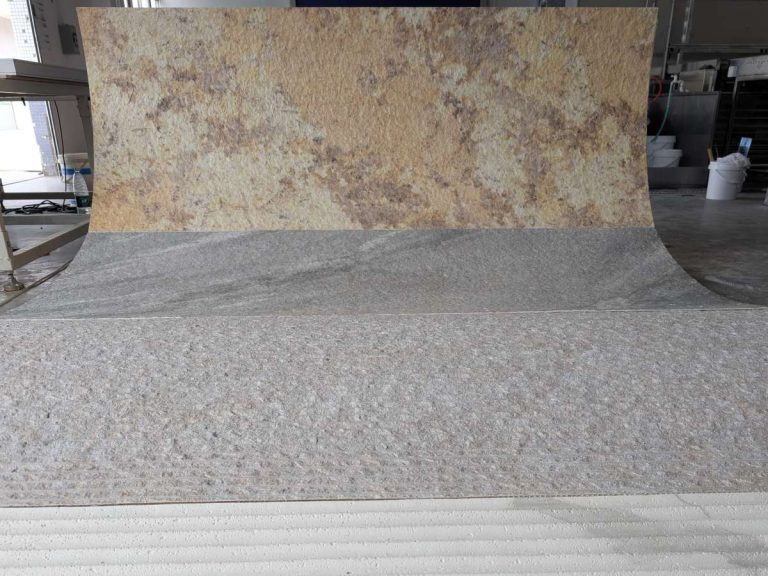
Quarried sandstone and rigid manufactured veneer are both flat, brittle products — they don’t bend, so column wraps, arches, and curved feature walls need mitered cuts and extra joints. Flexible sandstone-look panels can conform to curved and irregular surfaces within the specified bend radius, which is the one durability advantage exclusive to the engineered format. Radius limits and substrate compatibility for curved installs are detailed in Curved Wall Cladding.
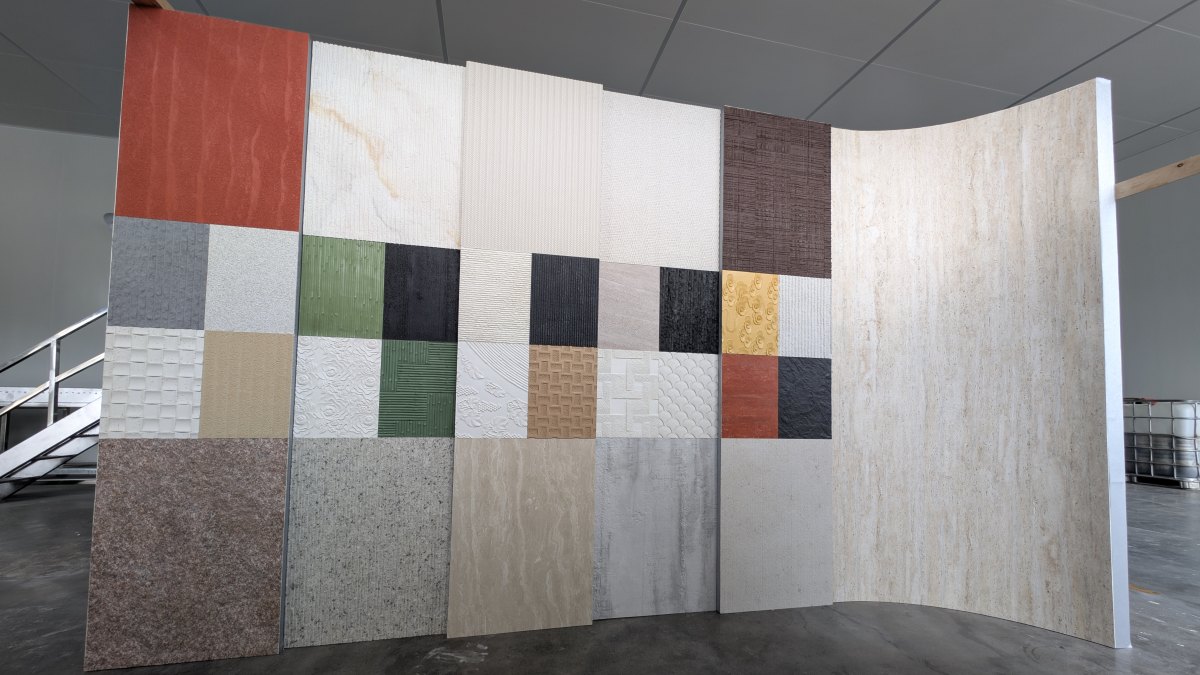
Flexible sandstone-look panels shaped around a curved display wall — a radius that rigid natural or manufactured veneer can’t follow without mitered joints.
Angtai reports a Grade 4 internal wear rating, a -40°C to 150°C test range and freeze-thaw performance for selected flexible sandstone-look models. These figures are manufacturer-reported and should be checked against the selected model, test method and installation-system scope. Do not map the internal Grade 4 label to PEI, ASTM C1027 or ISO 10545-7 unless the supplied report names that standard; request the applicable wear, temperature and freeze-thaw documents before specification.
Fire resistance is a real, verifiable property of certain sandstone veneer formulations, but “fire resistant” and “non-combustible” aren’t interchangeable terms — they mean different things under building code. The distinction, and which wall assemblies actually qualify as non-combustible, is explained in Non-Combustible Wall Panels and What Does Non-Combustible Mean?
Sandstone is a sedimentary rock with real pore structure, and it drinks water — water absorption commonly runs 5–15% by weight depending on cementation and grain size, and highly porous varieties can exceed 20%. Left unsealed, it stains from mineral runoff, develops efflorescence (the white powdery salt bloom that appears as water evaporates out of the stone), and in freeze-thaw climates that trapped moisture expands and spalls the surface. This is the single biggest disadvantage tied to sandstone as a mineral, not to veneer as a category.
Cementitious manufactured veneer is cast from a limited set of molds. Install it across a large wall and the same three or four stone faces start repeating in an obvious rhythm, and grout lines between panels become visible seams rather than a continuous stone surface. Because the body is cement-based, its freeze-thaw performance is typically evaluated with concrete durability methods such as ASTM C666; without adequate curing and sealing, joint cracking in freeze-thaw climates tends to appear within a handful of winters.
Most moisture damage attributed to “stone veneer” is actually a flashing and drainage problem, not a material problem. Skip the weep gaps, skimp on the water-resistive barrier, or seal the bottom edge against grade, and water gets trapped behind the panel regardless of which sandstone format is used — leading to mold, rot in the substrate, and panels that pop off the wall. Correct detailing is explained in the rainscreen system guide and exterior stone panel guide.
Installed pricing for stone veneer broadly follows a hierarchy: manufactured cementitious veneer generally runs cheapest per square foot, natural quarried sandstone highest due to quarrying, cutting, and mason labor, with engineered flexible panels often landing in between once the labor savings from lighter substrate work are factored in. General market figures for stone veneer projects commonly span roughly $15–$45 per square foot installed depending on stone grade, wall complexity, and region. Exact factory-direct figures for Angtai’s flexible line are broken out in Thin Stone Veneer Cost and the Flexible Stone Price Guide.
Not every manufactured or printed sandstone-look product performs the same outdoors. Color retention varies by material, finish and production method, so outdoor suitability should be confirmed for the selected product and application.
| Factor | Natural Quarried Sandstone | Manufactured (Cementitious) | Flexible/Soft-Porcelain (Angtai spec) |
|---|---|---|---|
| Lifespan expectation | Often cited at 75–100+ years with sealing and drainage maintenance | Typically 20–30 years before joint/seam repair is needed | Varies by product, finish and installation conditions |
| Moisture resistance | Porous — 5–15%+ water absorption by weight; prone to staining/efflorescence | Cementitious body absorbs moisture at unsealed joints | Rain-washable, easy-clean surface |
| Wear behavior | Depends on stone type, finish and exposure | Depends on mix, joints and installation | Manufacturer-reported Grade 4 internal wear rating; request the test method and report |
| Temperature/freeze-thaw | Varies by stone, saturation and detailing | Varies by mix, saturation, joints and installation | Manufacturer-reported -40°C to 150°C test range and freeze-thaw result; request conditions and system scope |
| Maintenance need | Periodic resealing every few years | Periodic joint/seam inspection | Low — no resealing required |
Most of the failures above are preventable with correct detailing rather than a different material choice:

Etter board is one of several accepted substrates — it still needs leveling, cleaning, and a wall-solid interface layer before adhesive goes on, per the prep step above.

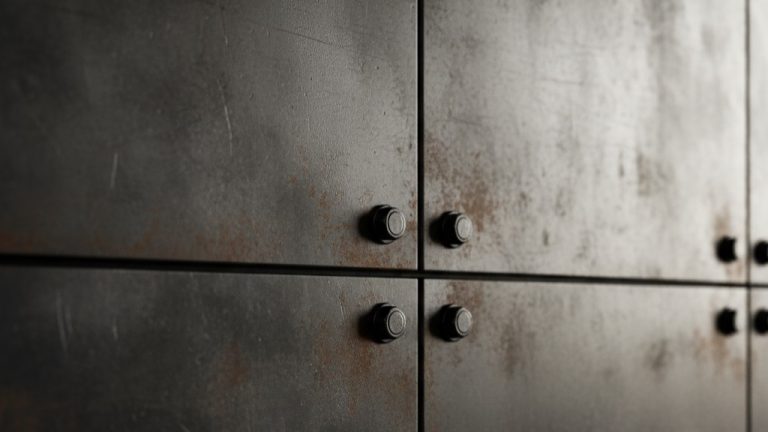
An aluminum-plastic panel substrate with its riveted grid — another accepted base, but drainage gaps and edge fitting still have to be planned before panels go up.
Full step-by-step detailing appears in the exterior stone panel guide and flexible stone rainscreen integration.
See the available formats on the sandstone veneer panel page, or request a physical sample for the selected finish.
What are the disadvantages of stone veneer?
The main disadvantages are moisture absorption in porous natural stone, visible seams and repeating patterns in manufactured veneer, installation errors that trap water behind the panel, and fading in lower-grade colored products. Which of these applies depends heavily on which format — natural, manufactured, or flexible — is actually installed.
How long do stone veneers last?
Service life and repair intervals vary by material, drainage, joints, exposure and maintenance. For flexible or soft-porcelain panels, confirm the selected product’s performance data and installation requirements before estimating service life.
Is stone veneer siding worth it?
It’s worth it when the substrate is prepped correctly, drainage is detailed properly, and the format matches the climate — freeze-thaw regions favor flexible or well-sealed natural stone over unsealed porous veneer. Skipping flashing and weep gaps is the most common reason projects regret the investment.
How often does sandstone veneer need to be sealed?
Natural quarried sandstone typically needs resealing every 2–5 years depending on exposure and sealant quality, since its 5–15%+ porosity keeps letting water back in once the coating wears off. Engineered flexible sandstone-look panels are rated low-maintenance and don’t require this resealing cycle.
What’s the difference between natural sandstone veneer and manufactured stone veneer?
Natural veneer is cut directly from quarried stone, so it carries authentic grain, color drift, and full mineral porosity. Manufactured veneer is cast from concrete and pigment to mimic that look — lighter and more affordable, but prone to visible seams and repeating mold patterns absent from the real thing.
Is manufactured or flexible sandstone veneer suitable for fireplaces?
Fire-resistant formulations exist in both manufactured and engineered sandstone-look veneer lines, but “fire resistant” is not the same as “non-combustible” under building code — check which rating a fireplace surround actually requires before specifying either format.
How much does sandstone veneer cost?
General market pricing for stone veneer projects runs roughly $15–$45 per square foot installed, with manufactured cementitious veneer usually cheapest, natural quarried sandstone highest, and flexible engineered panels often falling in between once lighter substrate labor is factored in. Exact factory-direct rates are broken down in the Flexible Stone Price Guide.
—
Sandstone’s biggest risk factor — porosity — is exactly what engineered flexible panels are formulated to eliminate. Compare durability trade-offs against interior-specific concerns in interior stone panel trade-offs, or review general flexible-stone trade-offs beyond sandstone in flexible stone panel trade-offs. Ready to compare the material firsthand? Request current pricing and a physical sample for the selected model.
 Guidelines
 Guidelines
 Guidelines
 Guidelines
 Guidelines
 Guidelines