By Jimmy
 21 Aug, 2026
 8 Minutes Read
This article is an evaluation checklist rather than a product catalog: use it to decide whether panel construction fits the room before comparing finishes or requesting a quote.
Interior stone wall panels are thin, flexible stone-look sheets — flexible stone (soft porcelain) or faux/MCM material — installed indoors on accent walls, feature walls, and hospitality interiors instead of quarried stone or stone veneer. Because they never face sun, rain, or freeze-thaw cycling, they generally have an easier job indoors than the same material does outdoors, which changes how long you can realistically expect them to last. Interior Stone Wall Panels has the sizes and finishes for accent-wall projects; the tradeoffs and lifespan numbers below come from installations in hotels, museums, and exhibition halls where daily wall contact makes wear resistance a real spec, not a marketing line.
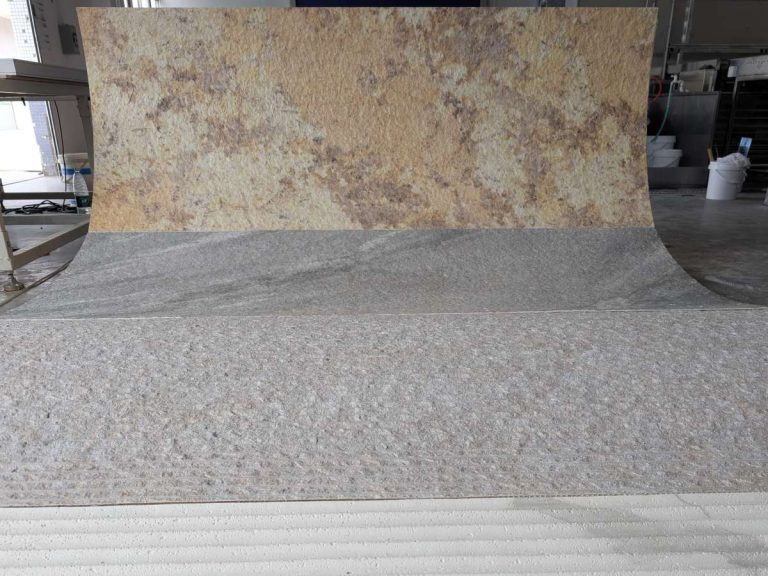
Lightweight compared to natural stone. Flexible stone panels are thin and bendable rather than solid-cut slabs, so interior framing and drywall typically don’t need structural reinforcement the way a real stone veneer installation might. That flexibility also means the same panel can wrap a curved reception desk or column instead of stopping at a flat wall — see Curved Wall Cladding for how the bend radius works in practice.
Large-format sheets reduce grout lines. Panels are available up to 1200×2400 mm and 1200×3000 mm, so a single accent wall can be covered with far fewer seams than small-format tile or brick veneer, giving a more continuous stone look.
Fire-performance documentation. Classifications are product- and assembly-specific. Request the applicable report and confirm the complete wall build-up against code requirements; see Non-Combustible Wall Panels.
Low maintenance indoors. With no rain or UV cycle to manage, the practical benefit indoors is simple: the surface wipes clean and doesn’t need periodic sealing the way natural stone does.
Lower material and labor cost than real stone. Thin, adhesive-applied panels cost less in both material and installation labor than a genuine stone or full veneer installation. For a sense of how comparable budgets run on an exterior project, see exterior stone panel cost guide.
Still costs more than paint or wallpaper. Even at a discount to real stone, panels are a materials-plus-labor product, not a $30-a-roll finish. For a small accent wall the gap may be trivial; for a full room it adds up.
Substrate prep is non-negotiable. The wall needs to be level, clean, dry, and firm before adhesive goes on — loose particles, dust, oil, or grease will compromise the bond. On smooth walls, a wall solid layer (interface agent) goes on first. That’s more prep than most “install it in an afternoon” claims suggest; it’s a manageable weekend job for someone comfortable with adhesives and cutting tools, not a peel-and-stick project.
Not literally quarried stone. Some buyers and designers weigh authenticity — a manufactured stone-look surface, however convincing up close, isn’t the same material as cut natural stone, and some clients will always prefer the real thing regardless of performance.
Repairs are panel-level, not spot-level. If a section gets gouged or damaged, the practical fix is usually replacing the affected panel rather than patching a small area invisibly, since blending a repair into a large-format sheet is harder than it is with individual small tiles.
Adhesive installs aren’t easily reversible. Because panels are direct-pasted to the substrate, removing them later — for a renter moving out or a remodel — can pull off drywall paper or leave adhesive residue that needs skim-coating to fix. Plan the wall as a longer-term commitment, not a temporary finish.
Hard surfaces don’t absorb sound. Like tile or stone, a large panel wall reflects sound rather than dampening it. In a room with hard flooring and high ceilings, an all-panel accent wall can add to echo rather than reduce it — worth pairing with soft furnishings or acoustic treatment elsewhere in the room.
Seams stay visible under raking light. Large-format sheets cut down on grout lines, but panel-to-panel joints and inside corners still show, especially where a spotlight or window grazes the wall at a low angle.
Adhesive curing needs ventilation. As with most tile and panel adhesives, keep the room ventilated while the adhesive cures during installation, particularly in a small or enclosed space.

Indoor exposure can be less severe than exterior exposure, but service life still depends on traffic, cleaning, substrate, adhesive, joints and maintenance; do not convert accelerated-weathering results into an indoor-life guarantee. The published figures — request the applicable report and model scope, manufacturer-reported Grade 4 internal wear rating, tolerance across a manufacturer-reported -40°C to 150°C test range, and a rain-washable, easy-clean surface — were measured against sun, rain, and freeze-thaw cycling that an interior wall never experiences.
Colorfastness and freeze-thaw testing are less representative of interior use; for high-contact interiors, request the selected finish’s wear, cleaning and antibacterial documents and review them against expected traffic — exactly where Angtai’s flexible stone has already been specified in hotel and museum projects.
Angtai backs installations with 24-hour after-sales customer service and an after-sales support, with warranty terms confirmed in the sales contract; ask for its specific terms when you request a quote.
The installation method is the same either way — adhesive applied to the panel back, pressed onto a prepared substrate — but the substrate and the risk profile differ. Indoors, panels typically go onto drywall, plaster, existing tile, OSB, or calcium-silicon board; the base still has to be level, clean, and dry, but there’s no freeze-thaw cycling or UV exposure to plan around, so panel selection can prioritize pattern and finish over weather-grade performance.
If your wall is actually outside — a façade, balcony wall, or weather-exposed entryway — the substrate prep, adhesive choice, and performance requirements shift toward wind load and weathering: exterior stone wall panels walks through that setup directly.

| Flexible Stone Panels | Real Stone / Stone Veneer | |
|---|---|---|
| Weight | Lightweight, no structural reinforcement typically needed | Heavy; may require backing/reinforcement |
| Installation | Direct-paste adhesive onto a prepared substrate | Mortared, cut-and-fit, generally professional-installed |
| Maintenance | Wipe clean, no sealing | Often needs periodic sealing/upkeep |
| Fire performance | Fire-resistant material | Naturally non-combustible, though backing/framing may not be |
| Repairability | Damaged sections generally replaced panel-by-panel | Individual stones or veneer pieces can sometimes be spot-repaired |
| Seam count | Fewer seams — sheets run up to 1200×2400mm and 1200×3000mm | More seams — set piece-by-piece or in smaller veneer units |
| Cost | Lower material and labor cost | Higher material and labor cost |
| Lead time | Production, sample availability and transit confirmed per order and destination | Varies by quarry, fabrication and destination |
For a stone type’s own tradeoffs against this general category — warm, sandy tones in particular — Sandstone Veneer Panels Pros, Cons & Durability goes deeper on that specific material. For the same flexible stone material used across both indoor and outdoor walls on one project, flexible stone wall panel pros and cons sets both environments side by side.
Interior stone panels do their best work on accent walls, feature walls behind a bed or TV, reception and lobby walls, and hospitality or retail interiors — Angtai’s flexible stone has been specified for exhibition halls, hotels, and museum interiors, where a large, stone-look surface matters more than the cost or weight of quarried stone. They’re a weaker fit if a client wants the tactile authenticity of real stone regardless of cost, or if the wall is small enough that substrate prep and adhesive setup outweigh the visual payoff. Thickness, weight and price vary by series and finish. Use the flexible stone price guide to review the cost drivers, then send the wall dimensions and preferred finish for exact specifications and pricing. If your palette calls for sandstone specifically rather than a general stone look, sandstone veneer panel guide covers that stone type’s finishes.

Ready to specify a wall? Review the interior stone wall panel range or send the project details to Angtai.
How long do faux stone panels last?
Indoor exposure can be less severe than exterior weathering. Service life depends on traffic, cleaning, substrate, adhesive, joints and maintenance.
Do stone walls increase home value?
No reliable data ties stone-look wall panels to a specific resale premium. A well-executed accent wall can make a room feel more finished to a buyer or guest, but treat that as a design decision that improves how a space presents, not a guaranteed dollar return.
What are the disadvantages of wall panels?
Cost above paint or wallpaper, mandatory substrate prep, the fact that they’re a manufactured look rather than quarried stone, panel-level (not spot) repairs, adhesive installs that are hard to reverse cleanly, and hard, reflective surfaces that don’t absorb sound the way soft finishes do.
Are stone walls still in style?
Yes — stone-look accent walls remain common in both residential and hospitality interiors, usually as a single-wall focal point rather than covering an entire room. Large-format panels that minimize grout lines have kept the look current rather than dated.
For exact sizing, finish options and lead times, send the wall dimensions and application details.
 Guidelines
 Guidelines
 Guidelines
 Guidelines
 Guidelines
 Guidelines